Thursday, 22 August 2019

Regency England Research - post 12 - HEALTH; disease, death, doctors and childbirth


Disease and Ailments


There’s no escaping it; times were tough. Average life expectancy was low; around just 35 years old. But do bear in mind that infant mortality was exceedingly high. And some did live to their 70s or 80s.

Medicine was still very basic. In fact, the medicine itself may kill you if the disease didn’t! Opium, mercury and laudanum were common ingredients. However, recall how botany was an important part of a young lady’s education; plant remedies were still much in demand. A humble vinaigrette was most convenient, particularly during a faint.

But before we get too far ahead of ourselves, perhaps it is prudent to consider the diseases and ailments which were rampant at the time. Consumption (TB/tuberculosis) was rife; perhaps you have seen the elegant coughs into handkerchiefs which then become spotted with blood in films? This was Britain’s biggest killer. But do look up that link to diseases for a comprehensive list with explanations. The link to ailments supplies further information. Apoplexy, now known as a stroke was also common.

Death was a frequent visitor to Regency homes. There were rituals to be completed as part of mourning. I’ll look at funerals in my next post, covering faith.

And doctors were as yet to find their full use. Blood-letting and purging were standard treatments. There were different levels of doctor:

v  Physicians – considered the most desirable as they had further education and apprenticeship. Being so learned, they were considered gentlemen. They charged high fees.
v  Surgeons – sort of like our modern GP and would treat lesser mortals. Would perform crude forms of surgery
v  Apothecaries – think of these as dispensing chemists or pharmacists. They would grind ingredients into powders and tinctures.
v  Midwives / Accoucheurs – The male midwife was introduced (the accoucheur). Viewed as educated and trusted by the nobility
v  Barbers / Dentists – I say dentist, but they pulled teeth and that was about it
More details can be found here and here.

The seeds of modern medicine were being planted. Cleanliness was being gradually recognised as helping to avoid killing one’s patients. Theories on germs were being discussed. And medical instruments were being developed. Times were a-changing!


Birthing

Even pregnancy, childbirth and confinement were being cared for differently, as my own Lady Anne discovers. The birthing chair was being substituted for a bed, caudle was out for mothers, and in came fresh air instead of the stale, enclosed, darkened rooms for confinement. Forceps were being introduced too. Sadly, gas & air and epidurals still hadn’t arrived, so it was a full-on pain experience!! :-O

Fashions were mercifully forgiving, given the high empire line of dresses. Maternity wear started to get its own fashions though.

The death rate for mothers was sadly still high and peurperal / childbed fever was regrettably common.

Presuming one has a strong enough constitution to survive all of that, congratulations were certainly in order. Once confinement was over, there was a churching ceremony (see confinement link above) as well as the christening. There was no shame to breast feeding. Although, once one had full social engagements, a wet-nurse would be required. Baby clothes and nappies were somewhat different to modern day. Blue trim wasn’t sexist per sey. It was used more on boys clothing, but that’s because they wanted to protect the precious moppets from evil spirits; the heir was everything!

To round off this section, there’s also some details on early childhood and clothing.

Of course, there were forms of contraception around, but as it was one’s duty to breed like rabbits, this was really only used by the ladies of the night.

What a charming note to end this blog post on!? Join me next time for a discussion on faith.

Always in love and light,
TL
 My book Regency Love contains glimpses into all of this, of course.


Wednesday, 21 August 2019

Regency England Research - post 11 - The British Seaside, Bath and baths


“Oh, I do like to be beside the seaside. Oh, I do like to be beside the seeeaaa…” – everybody sing along now.

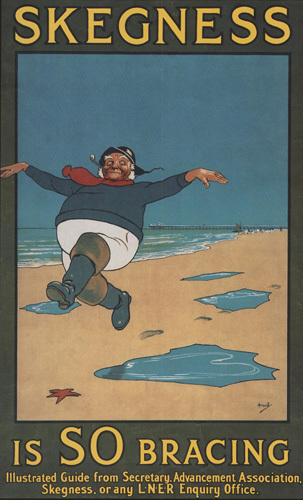
Ah, one of the great British pasttimes – going to the beach. It doesn’t matter if it’s not sunny. Skegness famously ran a successful advertising campaign for its bracing air (read flippin’ freezing and windy)!
Now, do proceed with caution, as it wasn’t until the railway network that seaside holidays truly became popular. However, the super rich, as ever, were the trendsetters.

There’s a list of historical seaside towns here by the way. Great Yarmouth is featured in my novel.
Sea bathing was promoted as beneficial to one’s health. Indeed, Mrs Bennet in Pride and Prejudice declared a desire for a little sea bathing.
My apologies; Bennet should only have one 't'!
However, one was required to wear a rather cumbersome bathing dress which included pantaloons for such an activity. And it was rather cold – our waters are not known for their warmth.

So, a very clever person decided that a bath house might be a good idea. There were only a couple in the UK, but one was happily situated in Lady Anne’s path. Seawater was pumped in and then heated in bathtubs. Herbs and oils could be added too. And one was served a glass of sea water to drink too – knowing what gets pumped into our seas, I think I’ll pass, thanks.

This was at a time when baths at home were still rare. It was too much faff even for the rich. They’d sometimes make their staff carry hot water and a big tub to them upstairs, and enjoy a good hot soak. But more often than not, they’d make do with a good bowl of water and some soap. Oh, talking of soap, I was delighted to discover that Pears soap came into existence in 1789 – I use it today as it smells so lovely. There were a few showers knocking around at this time, incidentally.

Of course, one could always “take the waters” in Bath. Thank you, Romans for the spa. Again, this was for their healing properties. One could dip in the naturally heated spa waters, or sip the water from a glass. Note; you can still do this, but don’t, it’s rather disgusting to drink! But do visit the town, for it is still marvellous and even has a lovely modern spa. The town had had fallen out of fashion during the Regency really, except for the invalids.

Jane Austen spent time in Bath herself, as has been well-documented.

I shall discuss matters of health next time.

Always in love and light,
TL

If you would like to visit the seaside with Lady Anne, please consider buying her book Regency Love

Tuesday, 20 August 2019

Regency England Research - post 10 - The British Weather


Look, you can’t expect a British person not to discuss the weather. We can experience all four seasons in one day; it gives us a lot to talk (and whinge) about. Honestly, bear with, there’s actually some interesting stuff here.

So, I’ve focussed on 1814 for Regency Love. It was generally a chilly year. The winter of 1813 was particularly severe.
December 2013 to January 2014 saw an average temperature of -3.15oC -very cold for England!! The Thames froze over. Using the best British spirit, Londoners decided it was a jolly good idea to hold a Frost Fair on the surface! :-O They even walked an elephant across! As you do!?

1816 was dubbed “The Year Without Summer”.

Weather is very important to us Brits, so if you want to mention it in your own book, do have a check on the weather records – it may add a little backdrop.


Oh, and don’t forget the terrible air quality of London. It was “a real pea souper”!

It was rather a dirty, smelly city. It’s easy to forget when one considers they didn’t have cars. However, there were plenty of horses – watch where you tread! Plus, without gas central heating, they used coal fires – phewee! The Thames itself was a bit of a cesspit. All sorts of detritus found its way into it. Finally, following The Great Stink in 1858, the politicians decided something needed to be done!


And during all this, there were brave boys fighting in the Peninsular Wars etc. (more on those later).

It takes more than snow and rain to stop us though, and later I’ll tell you all about the celebrations which still took place.

I’ll keep this post short. I don’t wish to bore you, merely reminding you of an important topic.


Next up, we’re taking a trip to the seaside. Tune in tomorrow!


Always in love and light,
TL

You know what’s fun to do when it’s raining? Staying inside and reading a good book, such as Regency Love

Monday, 19 August 2019

Regency England Research - post 9 – Houses


One is a member of the National Trust – I do love a good nose around old homes! Who else is with me on this? I find it fascinating, wandering about and envisioning what it would be like to “live like the other half”.

(*sigh*) One conjures up an image of Pemberley in the BBC adaptation of Pride and Prejudice. The outside was Lyme Park (inside was filmed in Lacock Abbey; oh, the joys of TV trickery!). A place so pretty it made Lizzie fall in love with the grumpy Mr Darcy! I confess, this then prompted my own hero’s abode. Who can blame me? Any film production companies please make notes 😉
 OK, we have a pretty good understanding of those glorious mansions, don’t we? But where did they live in town?
Lady Anne’s papa is a duke, so he would’ve had a grand home in London. 

I based his on a mishmash of real ducal houses I discovered. Sadly, World War 1 saw the demolition of many of these. Poopey! There’s still a few though, including No. 1 London (Apsley House), where the first Duke of Wellington resided, and the current one still does.

A typical townhouse layout would look like this. That is a fabulously informative article, do take a look. This is the type of house that most of the rich people outside of the nobility would buy/rent when in London.

Shall we talk drawing rooms? There was a vast array, as you can see there. But they were basically where ladies would spend a great deal of time when entertaining. In Regency times, this is where the musical instruments would usually be. Music rooms were then added from this period on.
Not to be confused with the Drawing Rooms which Queen Charlotte held; these were the court presentations. 😉

Talking of royalty, Buckingham Palace was actually merely Buckingham House back then, and pops up in my book. It was relatively newly built.

Fun fact; my own papa was ‘in trade’, specifically carpets. Axminster was still considered one of his finest ranges. And the Regency folk happened to agree. It amused me to include one such in my story in homage to my daddy.

If you wish to learn about furniture I shall point you in this direction.
And I’ll just leave this general architecture note here.

It was a curious thing, writing about Regency homes whilst acknowledging that Lady Anne’s would pre-date these as she came from an old family. Let’s face it, how many of us live in a 2019 house? It amuses me when I watch the fantastic David Suchet play Poirot how everything is art deco – not a complaint as it’s gorgeous.

OK, enough on houses. We don’t want to get bogged down with details of every brick. We write stories, after all. They just have to happen somewhere suitable.

Always in love and light,
TL
 (lalala Regency Love lalala)


Sunday, 18 August 2019

Regency England Research - post 8 – Education


This isn’t referred to directly much in my book, but one still had to think about what education young people received.

Of course, the poor were deemed not requiring too high an education. There were no free state-run schools. Think of poor Oliver Twist and you’ll get the vague idea, despite him being Dickension (later).

But the rich valued a good education.
Did you know Eton college was established in 1491? 😧 Lady Anne’s papa went there in my book. 
Harrow was its chief rival. And there were other learning academies and schools
Their lessons centred chiefly around “a classic education” (Latin, Greek, literature and the philosophies of the likes of Socrates) and would’ve included some science. But these were for the smelly old boys!
Young ladies were not supposed to be intelligent, unless you wanted them classed as a dreaded bluestocking (*shock, gasp, grabs smelling salts*). One would never bag a rich husband then!!

No, no, gently bred young ladies were to be “accomplished”. Girls’ schools were a bit rubbish. Think of Jane Eyre’s Victorian institution. So, most girls were home-schooled. Tutors would be brought in for some subjects and/or a governess. Basically, as much as you could afford. The more accomplished the young lady, the more desirable a marriage partner she would make, so long as she was sure to “hide her brains”.

A few were sent to what we’d call finishing schools, but this wasn’t common.
Arithmetic actually was important, as it fell to the lady of the house to run the household, including the accounts.

Girls Subjects
v  Reading
v  Writing
v  Arithmetic
v  Languages
v  Music
v  Painting & Crafts
v  Botany
Plus, a conversational knowledge of history, geography, literature, philosophy, science and politics

One lovely author has managed to find which text books would have been used.


Miss Bingley, Pride and Prejudice ~ "no one can really be esteemed accomplished who does not greatly surpass knowledge of music, singing, drawing, dancing, and the modern languages, to deserve the word; and besides all this, she must possess a certain something in her air and manner of walking, the tone of her voice, her address and expressions, or the word will be but half deserved."

 Feeling educated enough? OK, I’m going to leave you to ponder this.
Farewell until next time, my friends.


Always in love and light,
TL
(what? I might not have told you about my book. Better to be safe than sorry!)

Saturday, 17 August 2019

Regency England Research - post 7 - Servants duties, wages and money matters


When one has a large estate and a few houses, they must be run by someone. They’re not often referred to in books, sadly. They just sort of quietly get on with their duties, trying not to be noticed.
For a quick run-down on what servants there were, along with their salaries head over here. Or the Historical Hussies have details servants’ duties.

But how did one address a servant? Like all things Regency, this depended on rank. Surnames were a sign of respect, first names for underlings. Which is why you still find that usage in public schools today, albeit rarely now. Basically, your steward, butler, head housekeeper and lady’s maid were the only surnamed serfs.

The valet and lady’s maid were permitted into the inner sanctum of one’s life. This set them apart from the other household staff. As a result, they’d often be isolated. Geri Walton discusses the lady’s maid’s life nicely.

Retirement is never particularly discussed. One lived, one worked; pretty much it. However, in a lady’s duties, the poor, infirm and retired people were referred to. So there were a few, presumably to frail to work who were looked after by his lordship.

What, one has to pay them as well as provide board and lodging? Wages in Regency England are often listed as annual salaries, but I’m pretty sure they were paid in person on a quarterly basis. And you had to pay them reasonably well. Servants were free to come and go, and as there were so many houses, they weren’t always terribly loyal to the household, despite the impression we’re given. Their contracts were issued annually.
 
Whilst we’re discussing the rather vulgar topic of money
What was it worth?
There’s actually a rather funny currency converter or again, Historical Hussies supply more options.

Currency was made up of pounds, shillings and pence
There were: 
o   20 shillings in a pound
o   240 pence in a pound
o   12 pence in a shilling
o   5 shillings was a crown (a silver coin)
o   4 crowns were equal to a pound
o   21 shillings was a guinea (gold coin) – sovereigns replaced these in 1817

Hopefully, that helps put all those weird coins into context a bit for you.

What would this buy you? I mentioned the wardrobe for the Season in blog 3 on fashions, so let’s take that example (please note I’ve nicked these figures from elsewhere, but I can’t remember where): 
v  Silk Stockings = 12 shillings (approx. £20 in today’s money)
v  Woollen Stockings = 2 shillings 6 pence (£4.25)
v  Simple White Dress = 5 shillings (£8.49)
v  White Silk Handkerchief = 6 shillings (£10)
v  Pair of Gloves = 4 shllings (£6.79)
v  Fan = 5 shillings (£8.49)
v  Cotton Fabric = 1 shilling per yard (£1.70)
v  Velveteen Fabric = 2 shillings 10 pence (£4.81)
v  Enough Fabric for a Dress = 6 shillings (£10)
v  Enough Silk Fabric for a Dress = 1 pound 6 shillings (£44.15)
v  Shawl = £200-£300
v  Walking Boots = 2 pounds (£67.92)
v  Silk purse = 2 shillings (£4)
So, a wardrobe of just one each of these for the Season would cost around £400 in today’s money.

For bookworms, books would cost: 
v  Essays in Rhyme = 6 shillings (£10)
v  2 Volumes of Scripture (religious stuffs) = 14 shillings (£32)
v  3 Volume Novel = 15 shillings (£34 – about 5 days wages for a skilled tradesman!)
Hence the circulating libraries being popular!


Added to all this, the Corn Laws were passed in 1815, which meant a loaf of bread rose to over 14d (pence)! Things only got worse in 1816, when they had “The Year Without Summer” – the poor harvest meant prices rose again to over 4 shillings per loaf – crumbs (pun totally intended)! The ensuing starvation led to reform (see the link for details).

Oh, and there was an income tax repeal in 1816 – controversial subject! I’d moan about tax burdens here, but then again, I wouldn’t give up my NHS and state pension etc. – mustn’t grumble.


So, there we have it; what people earned and what they could spend it on.

Fun fact; there is a lady’s maid in my own family tree. Perhaps that’s why I wanted to include details of poor Clément in my book; kudos to them!
A groom also gets mentioned; yes, there’s one of those in my lineage too. Well, he was more of a driver in reality, but horse themed. 😊

Servants weren’t terribly well-educated, but I’m going to be looking at education in my next thrilling instalment.

Until then…


Love and light,
TL
Have I mentioned my book


Friday, 16 August 2019

Regency England Research - post 6 - Meal times and food - Dining the Regency Way


I touched on mornings being a bit ‘funny’ when I discussed morning calls which happened around 2pm. Meal times therefore also had a different pattern.

Of all the practices, their breakfast may be amongst my favourite. Cake and hot chocolate were popular amongst the rich. Yum! I move to bring this back!!

But it wasn’t eaten immediately upon rising. Folk would often get up, busy themselves with correspondence or some such activity and then have breakfast around 10 o’clock. 

Please note it wasn’t really until the Edwardians when the sumptuous breakfast in bed was served.

Because of this, lunch wasn’t really a thing. Nuncheon was slowly being introduced to keep the ladies going as dinner was later, around 6 to 8pm depending on what their plans were for the evening.

Dinner was the biggest meal of the day and contained many dishes.
And then a supper may be served around 10pm at the end of a ball.
Of course, one had to wear suitable attire for each of these meals.

 But what food did they eat?
Well, even the wealthy didn’t have access to supermarkets. Their food was still very seasonal, and often came from their own estates, particularly when in the country (as opposed to the city).

There’s an excellent list of seasonal food selection here. The men’s sport of hunting could bring home some supplies, but this wasn’t really their aim. They had gamekeepers and farmers for supplying food.

Herbs and vegetables, even fruit was grown in the kitchen garden. If you’ve ever visited an old manor house, you will probably have walked through one of these. They were functional as well as ornamental.

There’s a very detailed list of all things food and kitchen here. And some recipes. There’s a Pinterest page if you want to see what some of this looked like.

They had some very odd ideas of yumminess. Cockscomb and I’m sure I read somewhere that sucking out a chicken’s brains through its eye sockets was considered a delicacy; I couldn’t bring myself to write that into my book thought – bleurgh! Gelatin and aspic featured quite a bit – jelly type things, but as savoury as well as dessert courses.

Don’t worry; a lot of their meals were based around meat and fish, much as we know it. And ices were being introduced too (more sorbet type than the wonder that is ice cream).


All of this was washed down with drinks. Water, of course was there, but it wasn’t exactly Evian (other brands of bottled water are available).

Wines were common, but the ladies tended to stick to sweeter varieties, such as Madeira. There’s a good drinks blog post here, which also has links at the bottom for recipes.

I think I’ve already touched on the topic of dinner parties and hosting. Seating arrangements weren’t necessarily what you’d imagine. Superiority took precedence, but it wasn’t strictly boy girl order.
Following dinner, the ladies would retire to the drawing room whilst men had brandy and… well, there’s even an article on smoking as cigars weren’t strictly the thing. Perhaps a cheroot.

Bit of short but sweet post on dining, but there’s several good links which go into more detail included.


Always in love and light,
TL 
~ who wrote a Regency romance